Introduction
When you’re cooking for a growing family, regular dinner guests, or meal-prepping for the week, having the right kitchen equipment becomes less of a luxury and more of a necessity. Multi-cookers have become increasingly popular over the past decade, and for good reason—they consolidate several appliances into one counter space while offering genuine convenience and flexibility in how you approach cooking.
The landscape of multi-cookers has evolved significantly. What started as basic slow cookers have transformed into sophisticated programmable devices that can handle everything from traditional braising to steaming vegetables to making yogurt. If you’re exploring options in the large-capacity market, understanding what different features actually do and how they might fit into your kitchen routine is worth your time.
This article walks through what to consider when evaluating a large-capacity multi-cooker, what functionality matters most for different cooking styles, and practical information to help you make an informed decision about whether this type of appliance aligns with your needs.
Understanding Multi-Cooker Technology
Before diving into specifics, it helps to understand how modern multi-cookers work and what distinguishes them from traditional cooking methods. At their core, these appliances use programmable heating elements to maintain precise temperatures over extended periods. The combination of heat, moisture retention, and time creates different cooking environments suited to various tasks.
Traditional slow cookers rely on low, consistent heat over many hours to break down tougher cuts of meat and meld flavors. Pressure cookers accelerate this process using steam and pressure. Multi-cookers combine these approaches along with additional functionality, giving home cooks options based on what they’re preparing and how much time they have available.
The introduction of stainless steel inner pots marked an important development in multi-cooker design. Stainless steel distributes heat more evenly than non-stick alternatives, resists staining and odors, and tends to last longer with regular use. It’s also more versatile—you can use metal utensils without concern, and the cooking surface is forgiving with most ingredients.
Key Features and What They Actually Do
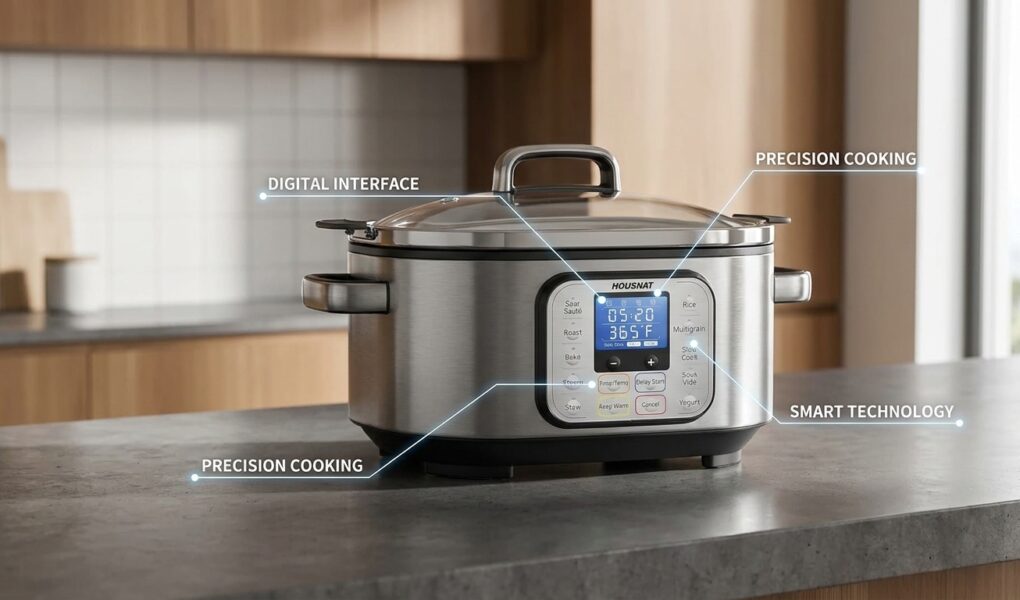
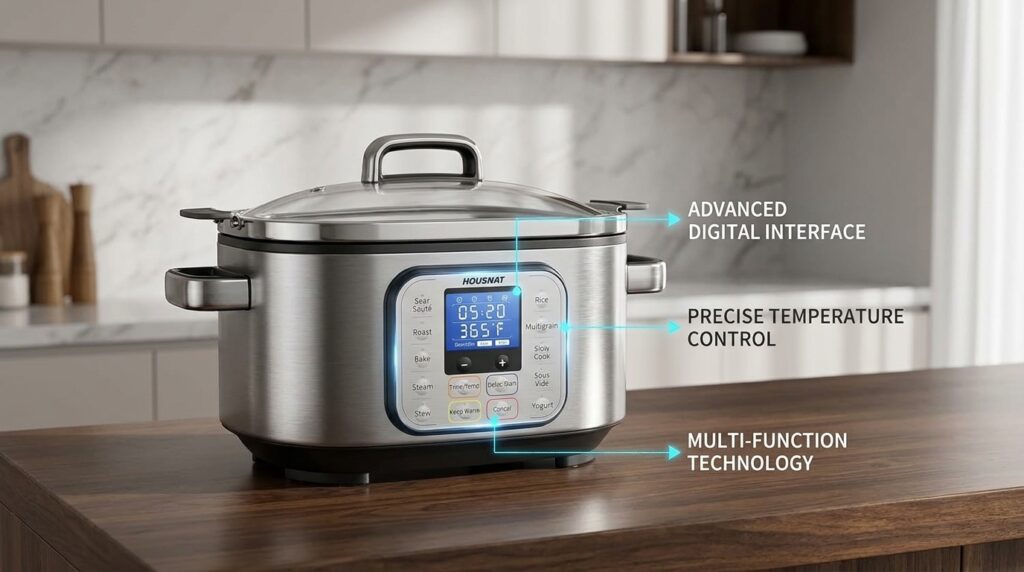
A 10-in-1 multi-cooker typically means the device can perform ten different cooking functions. Understanding what each mode does helps you figure out which recipes and cooking approaches become practical with this equipment.
Slow Cooking
The slow cooking function is straightforward—it maintains a low temperature over extended hours, typically between 8 to 10 hours for a full cooking cycle. This mode works well for tough cuts of beef, pork, or chicken that benefit from gradual tenderization. Root vegetables, beans, and legumes all soften well under slow cooking conditions. The key advantage is minimal active cooking time. You prepare ingredients in the morning, set the timer, and dinner is ready when you need it.
High-Temperature Cooking
A step above slow cooking, this setting increases the temperature to cook dishes more quickly—usually in 4 to 6 hours. It’s useful when you’ve planned dinner for a weeknight but started your prep later than ideal. The higher heat speed up the cooking process, though some cooks argue it doesn’t develop flavors quite as deeply as low-and-slow methods.
Sautéing
Not all multi-cookers include a sauté function, but it’s genuinely useful. This mode uses direct, high heat to brown meat or vegetables before adding other ingredients. Developing a good sear on meat builds flavor through the Maillard reaction—the browning that happens at high temperatures. Being able to sauté in the same vessel you’ll slow cook means fewer dishes to wash and less cleanup overall.
Steaming
The steaming function heats water to create steam that cooks food gently and quickly. This mode works well for vegetables, fish, and dumplings. Because steam cooking doesn’t involve direct contact with boiling water, delicate foods hold their shape and texture better. It’s also a way to prepare meals that retain more nutritional value compared to boiling.
Rice Cooking
Most multi-cookers include a dedicated rice mode. This function detects when rice has absorbed the appropriate amount of liquid and automatically switches to a keep-warm setting. For people who cook rice regularly, this is genuinely convenient—no more standing over a stovetop waiting for water to boil or wondering if you’ve hit the perfect texture.
Yogurt Making
The yogurt function maintains the precise temperature needed for fermentation—typically around 110°F. If you’re interested in making yogurt from scratch, you’ll need to inoculate milk with cultures and let them incubate for 8-12 hours depending on how tart you prefer the result. This function takes the guesswork out of temperature management, though it requires some upfront learning about the fermentation process.
Delay Start
This programmable feature lets you set ingredients in the cooker and schedule cooking to begin at a specific time. If you want dinner ready when you arrive home in the evening, you can prep everything in the morning, set a delayed start for early afternoon, and have a meal waiting. There are food safety considerations with delay start—raw meat sitting at room temperature for hours before cooking begins can pose risks. Most recipes for delay start focus on ingredients that are safer at room temperature, like vegetables and beans.
Adjustable Temperature Settings
Having multiple temperature options throughout a cooking cycle provides flexibility. Some recipes benefit from starting at a higher temperature to develop flavors, then lowering the heat to finish gently. Adjustable settings give you this control programmatically rather than requiring manual intervention.
Keep Warm Mode
This gentle heating maintains food at a safe serving temperature without continuing to cook it. If dinner finishes earlier than guests arrive, keep warm prevents your meal from drying out or cooling completely.
Capacity Considerations
A 6-quart capacity positions this appliance in the larger-capacity category. For context, standard multi-cookers typically hold 3-4 quarts, while 6-quart models accommodate larger portions and more people simultaneously. This matters if you’re regularly cooking for 6+ people, hosting dinners, or doing serious meal preparation.
How Large-Capacity Multi-Cookers Fit Into Different Cooking Styles
The way you use a multi-cooker depends significantly on your cooking habits and lifestyle. Let’s explore several common scenarios.
Weeknight Dinner Preparation
For weeknight cooking, the delay start feature becomes particularly valuable. Imagine preparing a beef stew in the morning—browning the meat using the sauté function, adding vegetables and broth, then setting the cooker to begin cooking several hours later. When you walk through the door tired from work, the meal is ready. This approach simplifies evening schedules, especially valuable for families with varied commitments.
The larger capacity means you can prepare enough to have leftovers, which transforms a one-night dinner into food for subsequent lunches or additional dinners later in the week.
Batch Cooking and Meal Prep
People who dedicate a few hours on weekends to preparing multiple meals find multi-cookers genuinely useful. Preparing a large batch of pulled pork or chili takes up significant space in a standard slow cooker, but a 6-quart model accommodates ambitious recipes. You can portion everything into containers and have ready-to-eat meals throughout the week.
Entertaining and Hosting
When you’re preparing food for 8-10 people, cooking capacity becomes the limiting factor. A 6-quart multi-cooker handles quantities that would require multiple standard cookers. Dishes that work well for entertaining—soups, stews, pulled meats, braised vegetables—all scale nicely in larger vessels.
Dietary Experimentation
The yogurt mode and rice function open doors to exploring foods you might not prepare otherwise. Making yogurt from scratch costs less than buying it regularly and opens possibilities for flavoring and customization. If you cook rice frequently, having a dedicated mode removes one variable from your cooking process.
Who Might Benefit From a Large-Capacity Multi-Cooker
Large-capacity multi-cookers make the most sense for specific household situations and cooking preferences.
Families of Six or More
Once your household expands beyond five people, cooking efficiently becomes important. A single large-capacity appliance can handle portions that would require multiple standard cookers or significant stovetop space.
People Who Batch Cook
If you dedicate time to meal preparation—cooking several meals at once to eat throughout the week—larger capacity is genuinely valuable. You can prepare multiple portions of different dishes or simply make more of a single recipe.
Frequent Entertainers
Hosting potlucks, family gatherings, or dinner parties becomes easier when your appliances can handle larger quantities. These events often work better when you can prepare a complete dish in a single vessel rather than managing multiple cookers.
Adventurous Home Cooks
The variety of functions appeals to people who like experimenting with different cooking approaches. Whether you’re making yogurt, steaming vegetables, preparing traditional slow-cooked braises, or experimenting with rice, the range of options supports culinary exploration.
People With Limited Counter Space
While a 6-quart multi-cooker isn’t small, having one appliance that handles ten different functions beats having separate slow cookers, rice cookers, steamers, and yogurt makers taking up kitchen real estate. The consolidation aspect matters for people working with limited space.
Important Practical Considerations
Before deciding whether this type of appliance suits your needs, several practical factors deserve thought.
Learning Curve
Multi-cookers with numerous functions require reading the manual and understanding how to use each mode. The features are only valuable if you understand how to use them properly. First-time users benefit from starting with simpler functions—basic slow cooking—before exploring more complex modes like yogurt making or pressure functions.
Heating Time and Cooking Duration
Despite the convenience factor, multi-cookers generally require more time to cook than stovetop or oven methods. A dish that might braise for 2 hours in an oven could take 8 hours in a slow cooker. This matters when you’re planning meals. Understanding the time requirements helps set realistic expectations.
Liquid Adjustment
Slow cooking in an enclosed environment retains moisture differently than stovetop cooking. Many slow cooker recipes use less liquid than traditional recipes would call for. Learning to adjust liquid amounts prevents dishes from becoming too thin or too thick.
Space and Storage
A 6-quart multi-cooker occupies countertop real estate. Some people keep their cookers accessible permanently; others need to store them when not in use. Understanding where you’ll place the appliance and whether you have appropriate storage matters before bringing it home.
Cleaning and Maintenance
The stainless steel inner pot cleans relatively easily with warm soapy water or a dishwasher if the manual indicates it’s safe. The heating base doesn’t go in water—you’ll wipe it carefully with a damp cloth. Knowing the care requirements upfront prevents frustration later.
Electrical Requirements
Most multi-cookers operate on standard household current, but knowing the wattage and ensuring you have an available outlet is worth confirming. If you live in an area with older electrical systems, being aware of appliance wattage prevents overloading circuits.
Understanding Different Cooking Vessel Materials
The inner pot material significantly affects cooking results and long-term satisfaction with an appliance.
Stainless Steel Construction
Stainless steel heats evenly and resists rust, staining, and absorbing odors. It’s durable and typically lasts for years. The trade-off is that food occasionally sticks more readily than it might to non-stick surfaces, particularly with acidic ingredients like tomatoes. Metal utensils won’t damage stainless steel, so you have more freedom with what equipment you use for stirring and serving.
Non-Stick Alternatives
Some cookers use ceramic or special non-stick coatings. These resist sticking and look distinctive, but they require more careful handling—you should avoid metal utensils and be mindful of scratching the surface. Over years of use, non-stick coatings can deteriorate.
For many cooks, the durability and straightforward maintenance of stainless steel makes it worth any minor inconvenience with sticking.
Comparing Large-Capacity Multi-Cookers by Function
When evaluating different models in this category, several functional differences matter.
Number and Type of Cooking Modes
Not all multi-cookers offer identical functions, even if they claim similar numbers of modes. One model’s 10 functions might include features another model achieves differently. Understanding what specific modes matter for how you’ll cook helps compare options meaningfully.
Temperature Range and Adjustability
Some cookers offer fixed temperature settings for each mode; others allow finer control. If you experiment with recipes, adjustable settings provide flexibility.
Timer Duration
Most modern cookers program up to 12-24 hours, which covers virtually any reasonable cooking scenario. Knowing the maximum duration helps confirm it matches your needs.
Interior Capacity Utilization
A 6-quart capacity doesn’t mean you can comfortably fill it to the brim for every function. Most cookers perform best when filled 50-75% full. Manufacturer guidelines typically specify minimum and maximum fill amounts for different modes.
Exterior Dimensions
A 6-quart cooker is larger than a 4-quart model. Checking actual dimensions—not just capacity—ensures it fits your counter space appropriately.
Practical Usage Ideas Beyond Basic Cooking
Once you own a multi-cooker, several applications extend beyond straightforward recipes.
Building Broths and Stocks
The slow cooking function works beautifully for making bone broth or vegetable stock. Simmering bones and aromatics for 12 hours extracts gelatin and minerals, creating richer base ingredients for soups and sauces.
Preparing Legumes
Dried beans, lentils, and split peas soften beautifully in a multi-cooker with minimal active preparation. Unlike stovetop cooking where you monitor water levels, a slow cooker handles this unattended.
Caramelizing Onions
The sauté function allows you to create deeply caramelized onions for French onion soup, burgers, or pasta toppings. What takes 45 minutes on the stovetop (with regular stirring) can be achieved without constant attention.
Steaming Vegetables for Meal Prep
Preparing large batches of steamed broccoli, carrots, or other vegetables becomes simple—everything cooks simultaneously without hovering over a boiling pot.
Infusing Flavors in Grains
Beyond simple rice cooking, you can prepare grain-based dishes where flavors infuse throughout cooking—like risotto-style rice or pilaf variations.
Common Questions About Large-Capacity Multi-Cookers
How much does a 6-quart multi-cooker weigh?
Most models in this category weigh between 8-12 pounds. This matters if you plan to move it frequently. Once positioned, it generally stays in place.
Can you use frozen ingredients in a multi-cooker?
You can, though most recipes recommend thawing meat first to ensure even cooking and food safety. Frozen vegetables can usually go in directly, though they’ll extend overall cooking time somewhat.
What’s the difference between slow cooking and pressure cooking in a multi-cooker?
This particular model includes slow cooking functions. Pressure cooking (available in some multi-cookers) uses steam and pressure to cook much more quickly—typically reducing cooking time by 60-70%. Slow cooking relies on low heat over extended time.
Is the delay start function safe?
Delay start is safe when used appropriately. Raw vegetables, beans, and grains can sit at room temperature before cooking begins. Raw meat requires more caution—consider using the delay start only with properly thawed meat and keeping delay times under a few hours, or avoid delay start with raw meat entirely.
How many people can this realistically feed?
A 6-quart capacity comfortably feeds 8-10 people with a dish like stew or chili, or 12-15 people if serving rice or grain-based dishes that are less dense.
Do you need to stir ingredients while slow cooking?
Unlike stovetop cooking, slow cooking doesn’t typically require stirring. The enclosed environment and consistent heat distribution mean ingredients cook evenly without intervention.
How much electricity does a multi-cooker use?
Most use between 700-1200 watts when actively heating. For reference, this is less than many other kitchen appliances like ovens or electric kettles. Running cost is minimal.
Conclusion
A large-capacity programmable multi-cooker consolidates several cooking functions into a single appliance, making it particularly useful for people with specific needs: families of six or more, people who meal prep regularly, frequent entertainers, or adventurous home cooks interested in exploring different cooking techniques.
The 10-in-1 functionality provides real options—whether you’re slow cooking, sautéing, steaming, or making yogurt, the range of modes supports various culinary approaches. The stainless steel interior pot offers durability and even heating. The 6-quart capacity handles quantities that would challenge standard cookers, and features like delay start and adjustable temperatures provide practical flexibility.
Like any kitchen appliance, success depends on understanding what the features actually do and how they fit into your cooking habits. Reading the manual and starting with basic functions before exploring more complex modes helps new users gain confidence. The investment makes most sense for households and cooking styles where you’ll regularly use multiple functions.