Introduction
When it comes to preparing rice in large quantities, the equipment you choose can significantly impact both the final result and your kitchen efficiency. The Aroma Housewares 60-Cup Commercial Rice Cooker represents a specific category of appliance designed to handle substantial volumes of rice preparation—something that goes well beyond the needs of typical home cooking. Whether you’re managing a restaurant kitchen, catering for events, feeding a large organization, or simply preparing rice regularly for a big family, understanding what this appliance offers is important for making an informed decision.
This guide explores the features, capabilities, and practical considerations of the ARC-1033E model in depth. Rather than focusing on whether it’s right for you based on marketing claims, we’ll examine what the unit actually does, how it works, and what situations make it worth considering. The goal is to provide you with concrete information so you can determine whether a commercial-grade rice cooker aligns with your specific needs.
Understanding Commercial-Grade Rice Cookers
Before diving into the specifics of the Aroma model, it’s worth understanding what distinguishes commercial-grade rice cookers from standard household models. Commercial equipment in any kitchen category is engineered differently than residential appliances. The differences aren’t always obvious, but they affect durability, capacity, heating consistency, and overall functionality.
Commercial rice cookers are built to handle repetitive use cycles throughout the day. They’re constructed with components designed to withstand frequent operation and are typically made with more robust materials. A household rice cooker might be used once or twice daily, whereas a commercial unit in an active kitchen could operate five, ten, or more times throughout a business day. This fundamental difference drives decisions about materials, heating systems, and control mechanisms.
The capacity numbers on commercial units deserve explanation. When you see “60-cup cooked” and “30-cup uncooked,” these measurements follow industry standards. The cooked volume roughly doubles the uncooked volume due to rice absorbing water during the cooking process. This isn’t unique to Aroma—it’s an industry standard conversion that applies across all rice cooker manufacturers.
Key Features and Specifications of the ARC-1033E
The Aroma 60-Cup Commercial Rice Cooker is equipped with several features that define its operational capacity and approach to rice cooking. Understanding these elements helps clarify what the appliance is designed to accomplish.
Capacity and Cooking Mechanics
The unit’s primary specification is its size: it can cook 30 cups of uncooked rice, which yields approximately 60 cups of cooked rice. For perspective, this translates to roughly 60-75 servings of rice, depending on portion size. The heating mechanism uses traditional resistance heating, which is a straightforward and reliable approach to raising temperature consistently across the cooking chamber.
Construction Materials
Commercial rice cookers typically use aluminum, stainless steel, or a combination of both for their cooking vessels and external components. These materials are chosen because they conduct heat efficiently and withstand repeated washing and handling. The choice to use these materials reflects the difference between equipment meant for occasional home use and equipment designed for commercial environments.
Control Systems
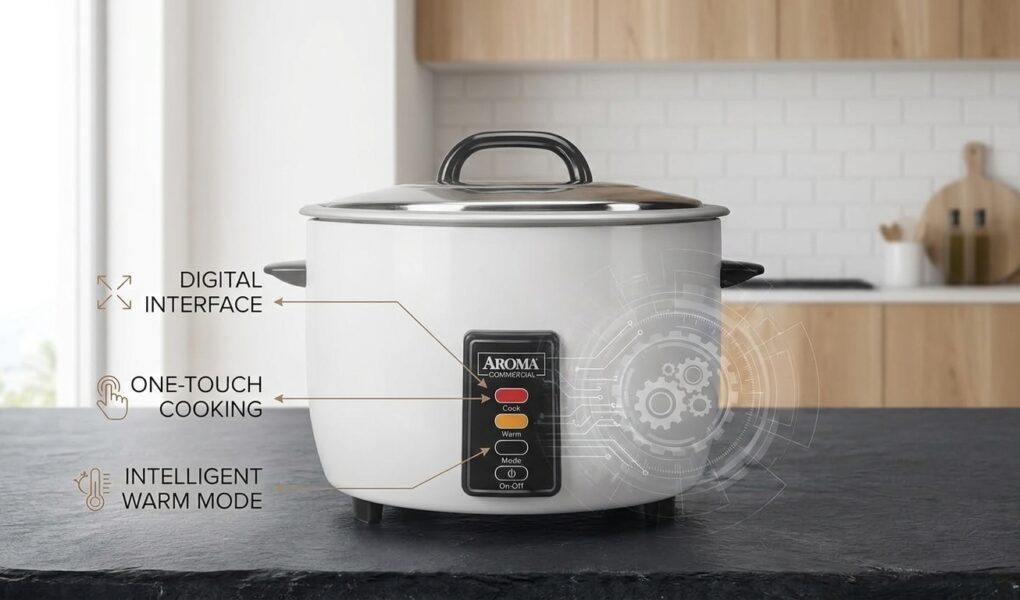
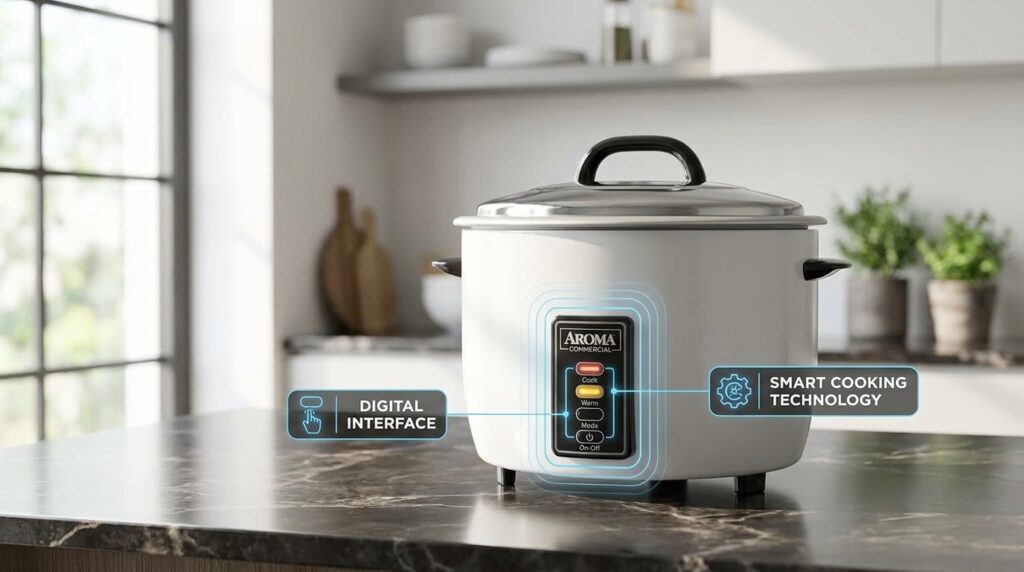
The ARC-1033E uses manual controls rather than digital interfaces. This is a deliberate design choice common in commercial equipment. Manual controls tend to be more durable in high-volume kitchens, easier to learn and use quickly, and less prone to malfunction. There’s less to go wrong with simple switches and indicators compared to complex electronic panels.
Keep-Warm Function
Like most rice cookers, this model includes a keep-warm setting that maintains cooked rice at a serving temperature after the cooking cycle completes. In commercial settings, this feature matters significantly because rice often needs to sit prepared for some time before service begins.
How the Aroma Commercial Rice Cooker Is Typically Used
The capacity of a 60-cup rice cooker immediately tells you something about its intended use cases. This isn’t an appliance for occasional rice preparation. It’s designed for situations where rice is made in large batches regularly.
Restaurant and Commercial Kitchen Settings
Restaurants—particularly those serving Asian cuisine, Latin cuisine, Mediterranean cuisine, or any international food style where rice is a staple—often operate with commercial rice cookers. A single cooking cycle can supply rice for lunch service, allowing kitchen staff to prepare multiple batches throughout the day as needed. Having a dedicated rice cooker separate from other cooking equipment allows chefs to maintain rice quality without using stovetop space or competing for oven capacity.
Catering and Event Services
Catering companies and event planners who regularly prepare large meals benefit from this type of equipment. Instead of improvising with home appliances or using slow methods on the stovetop, a commercial cooker handles the task efficiently and consistently, freeing up preparation space and personnel for other tasks.
Institutional Food Services
Schools, colleges, corporate cafeterias, hospitals, correctional facilities, and other large institutional settings often maintain commercial-grade cooking equipment. Feeding hundreds or thousands of people daily requires reliable, consistent equipment that can operate repeatedly without degradation.
Cultural and Religious Centers
Houses of worship, cultural organizations, and community centers that hold large meals or festivals often invest in commercial cooking equipment to serve their communities efficiently.
High-Volume Home Cooking
While less common, some households with large families, those following certain dietary practices, or multi-generational living situations find large-capacity rice cookers practical. If you’re regularly cooking rice for 20+ people, a commercial model sometimes makes more sense than running multiple household cookers.
Physical Specifications and Practical Considerations
The size and electrical requirements of the ARC-1033E are practical matters worth understanding before considering this appliance.
Dimensions and Space
Commercial equipment occupies substantial counter or table space. The footprint of a 60-cup rice cooker is notably larger than household models. Before purchasing, you’d need to verify that your available space accommodates the unit. This isn’t just about square footage—you need adequate clearance around the appliance for operation, access to controls, and removal of the lid during cooking.
Electrical Requirements
Commercial rice cookers typically require heavy-duty electrical service. The ARC-1033E’s power needs reflect the energy required to heat large volumes of water and rice. You’d need to confirm your electrical setup can accommodate the appliance’s requirements. In some cases, this might require consultation with an electrician to ensure adequate capacity and appropriate outlet placement.
Weight
A fully loaded commercial rice cooker is significantly heavier than household appliances. The unit itself, plus 30 cups of uncooked rice (about 180 ounces or more than 11 pounds), plus water, creates considerable weight. This affects not just moving the appliance but also structural considerations for where it sits.
Features Worth Understanding in Detail
Temperature Control
The heating system raises water and rice to appropriate temperatures for cooking. The approach used in commercial models prioritizes consistency—maintaining stable temperatures across multiple cooking cycles rather than optimizing for any single aspect of flavor or texture. This consistency is valuable in commercial settings where batch-to-batch uniformity matters.
Durability Considerations
Commercial equipment receives more intensive use than household appliances. The materials and construction reflect this reality. Aluminum and stainless steel components resist corrosion from repeated washing and contact with minerals in water. Internal components are built to last through thousands of cooking cycles.
Simplicity of Operation
The manual control interface means there aren’t complex programs or settings to learn. An operator simply loads rice, adds water, and activates the cooking cycle. This simplicity actually matters in commercial settings where multiple people use the same equipment and training time needs to be minimal.
Who Would Find a 60-Cup Commercial Rice Cooker Suitable
The capacity and design of this appliance make it appropriate for specific situations rather than general use.
Food Service Professionals
Anyone whose job involves preparing food for large groups benefits from having reliable, properly sized equipment. Restaurant owners, head chefs, catering managers, and food service directors in large organizations fall clearly into this category.
Frequent Large-Batch Cooks
People who regularly prepare meals for significant gatherings—whether weekly, monthly, or seasonally—find that proper equipment makes the process manageable rather than chaotic. This might include community event organizers, religious leaders who prepare community meals, or others in similar roles.
People with Large Households
Extended families, multi-generational living situations, or group homes with substantial populations might find a large rice cooker practical for daily meal preparation.
People with Specific Dietary Approaches
Those following certain diets that emphasize rice consumption or those preparing meals for freezing might benefit from batch cooking capacity.
Fitness and Nutrition-Focused Individuals
Some people engaged in serious athletic training or following specific nutrition plans prepare large quantities of rice in bulk. While they might typically use smaller equipment, the commercial approach sometimes makes sense for batch preparation.
Important Considerations Before Purchasing
While commercial rice cookers offer certain advantages for appropriate use cases, several practical matters deserve thought.
Space Requirements
This isn’t a compact appliance. Your kitchen or food preparation area needs adequate counter or table space. You’ll also need to consider access to electrical outlets and water sources, plus space for operation and cleaning.
Electrical Needs
The power requirements mean you need compatible electrical service. Standard household outlets might not be suitable. You may need dedicated circuits or special outlet installation, which adds cost and requires professional assistance.
Maintenance and Cleaning
A larger appliance takes longer to clean than a household model. The internal surfaces need regular cleaning to prevent mineral buildup or rice residue accumulation. You’d want to establish cleaning routines and possibly assign responsibility for regular maintenance.
Cost of Entry
Commercial-grade appliances cost more than household equipment. The investment is justified for high-volume users, but it’s not suitable if you only occasionally need large quantities of rice.
Learning the Appliance
While manual controls are straightforward, you’d need to develop experience with your specific unit to understand timing, water ratios, and any quirks in how it operates.
Storage of Cooked Rice
Preparing 60 cups of cooked rice creates a storage challenge. You need appropriate containers, refrigeration space if you’re not using it immediately, or a plan for distribution if you’re serving large groups.
Water Quality
Hard water or mineral-rich water affects performance over time. Depending on your water supply, you might need to address water quality to prevent buildup inside the appliance.
Comparing Commercial and Household Rice Cookers
Understanding how commercial equipment differs from household models provides useful context for considering whether this capacity level makes sense for your situation.
Capacity Differences
Household rice cookers typically range from 5 to 20 cups of cooked capacity. The jump to 60 cups represents a different category of appliance entirely. If you need rice for 10 people, a commercial unit is oversized; if you need rice for 50 people, household cookers become impractical.
Durability and Build Quality
Commercial equipment uses materials and construction methods designed for intensive use. Household appliances are engineered for intermittent use. This difference affects longevity and reliability under demanding conditions.
Heating Systems
Commercial models typically use simpler heating mechanisms optimized for consistency rather than sophistication. Household models often include features like multiple cooking settings, temperature sensors, or timer functions that aren’t present in commercial units.
Price Point
The investment in commercial equipment is substantially higher than household rice cookers. This cost reflects the engineering, materials, and manufacturing processes, but it means the financial commitment is significantly greater.
Space and Electrical Requirements
Household appliances fit on standard counters and use regular electrical outlets. Commercial equipment has different needs in both dimensions.
Ideal Use Scenarios
Household rice cookers work well for daily cooking for small to medium groups. Commercial cookers excel when you need large quantities regularly. Occasional large-batch preparation might be better served by using multiple household cookers or other cooking methods.
Frequently Asked Questions
What’s the difference between the cooked and uncooked measurements?
Rice roughly doubles in volume when cooked because it absorbs water. The 30-cup uncooked measurement becomes approximately 60 cups when cooked. This follows consistent conversion across all rice cooker brands.
Can you cook different types of rice in this cooker?
Most commercial rice cookers handle various rice types—white rice, brown rice, jasmine rice, basmati rice—though cooking times and water ratios might vary slightly. The manual for your specific model would provide guidance on adjustments needed for different varieties.
How long does a cooking cycle typically take?
Commercial rice cookers usually complete cooking cycles in 45 minutes to an hour, depending on rice type and quantity. The keep-warm function then maintains the rice at serving temperature.
What maintenance does this type of appliance require?
Regular cleaning after each use is important. The inner cooking pot should be cleaned thoroughly. Depending on water quality, descaling might be necessary periodically to prevent mineral buildup. Following the manufacturer’s maintenance recommendations extends equipment lifespan.
Can this cooker handle partial loads?
Most commercial rice cookers can operate with less than full capacity. You could cook 15 cups of uncooked rice instead of the full 30 cups. However, water-to-rice ratios remain important for proper cooking, so you’d need to adjust water quantities accordingly.
Is this appropriate for home use?
It depends on your specific situation. If you regularly cook rice for large groups or practice batch cooking for personal use, it could be practical. For typical household cooking, a standard rice cooker is usually more appropriate given space and electrical considerations.
How reliable is commercial equipment versus household appliances?
Commercial equipment is built to withstand intensive use. The materials and construction typically prove more durable over time, especially under heavy use. For occasional use, the advantage is less pronounced.
What happens if you need rice quantities between household and commercial cooker capacity?
Some people in this situation use multiple household rice cookers simultaneously, which offers flexibility in capacity scaling. Others invest in mid-range equipment. It depends on your specific volume needs and frequency of large-batch cooking.
Does brand matter with commercial rice cookers?
Several manufacturers produce commercial-grade rice cookers. Aroma is one established manufacturer in this category. Quality and reliability vary among brands, but established manufacturers with service support and parts availability generally offer better long-term value.
Conclusion
The Aroma Housewares 60-Cup Commercial Rice Cooker (ARC-1033E) represents a specific category of kitchen equipment designed for situations where large quantities of rice are prepared regularly. It’s not a product intended for occasional use or typical household cooking—it’s engineering and capacity target professional food service environments and high-volume cooking situations.
The appliance brings together straightforward design, robust construction, and substantial capacity in a single piece of equipment. For organizations and individuals whose needs align with these specifications, commercial-grade rice cookers simplify meal preparation and ensure consistency across large batches. The investment in proper equipment often proves worthwhile when you’re serving large groups regularly.
Understanding whether this appliance suits your situation requires honestly assessing your actual rice preparation needs. If you regularly prepare rice for dozens or hundreds of people, or if you frequently batch cook large quantities for personal use, the capacity and design of commercial equipment make practical sense. If your cooking is more occasional or smaller in scale, household appliances typically prove more suitable.
The decision ultimately comes down to matching equipment to actual needs. Commercial rice cookers fill a specific role in professional kitchens and high-volume cooking operations. Recognizing whether that role aligns with your situation provides the foundation for making an informed choice.